
India is a land of deep traditions, diverse cultures, and strong social values. When traveling across the country, understanding basic cultural etiquette not only helps you avoid awkward situations but also allows you to connect respectfully with locals. For travelers—especially solo travelers—following local customs creates safer, warmer, and more meaningful experiences.
This detailed guide will help you understand the most important cultural etiquettes every traveler should know before exploring India.
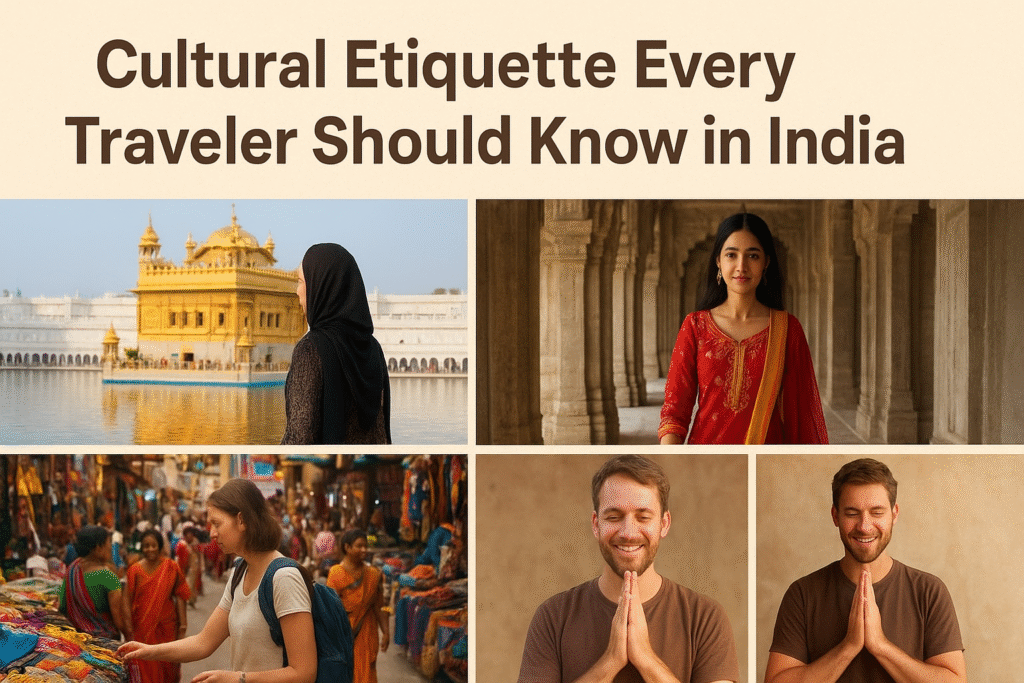
Dress Modestly and Respectfully
India is culturally conservative in many regions, especially in rural areas and religious places. Wearing modest clothing shows respect for local values.
- Prefer clothes that cover shoulders and knees
- Avoid very revealing outfits in temples, villages, and small towns
- Carry a scarf or stole—it’s useful for temples and sun protection
In metro cities, dress codes are more relaxed, but modest dressing is still appreciated.
Respect Religious Places and Rituals
Religion plays a significant role in daily life across India. Temples, mosques, churches, and gurudwaras are sacred spaces.
- Always remove footwear before entering religious places
- Dress modestly and maintain silence
- Follow local instructions and signs
- Avoid touching idols or sacred objects unless permitted
Never disturb prayers or rituals for photos—it’s considered disrespectful.
Greeting People the Right Way
The most common greeting in India is “Namaste”, said with folded hands. It is polite, respectful, and widely accepted.
- Handshakes are common in cities but not always preferred in rural areas
- Avoid physical contact with strangers, especially with elders or women
- Address elders respectfully using words like ji
A smile and polite tone go a long way in India.
Understand Food Etiquette
Food is an important part of Indian culture, and there are certain etiquettes associated with it.
- Eating with hands (right hand only) is common and acceptable
- Avoid using the left hand while eating or offering food
- Don’t waste food—it is considered disrespectful
- If eating at someone’s home, accepting food is a sign of respect
Trying local food with appreciation builds instant connection with locals.
Photography Etiquette: Always Ask First
India is visually rich, but not everything should be photographed freely.
- Always ask permission before photographing people
- Avoid taking photos during religious rituals or funerals
- Some temples and ghats prohibit photography—respect the rules
Responsible photography builds trust and avoids conflict.
Respect Personal Space and Social Norms
Personal space norms in India differ from Western cultures.
- Public displays of affection are not socially accepted in many areas
- Loud behavior in public places is discouraged
- Patience is important—things may not always be on strict schedules
Understanding these differences helps travelers adjust smoothly.
Bargaining Is Normal, But Be Polite
Bargaining is common in local markets, street shops, and auto-rickshaws.
- Bargain politely with a smile
- Avoid aggressive negotiation
- If the price doesn’t feel right, walk away respectfully
A respectful approach keeps interactions positive.
Respect Elders and Local Authority
Elders are highly respected in Indian society.
- Offer seats to elders when possible
- Speak politely and patiently
- Follow rules set by local authorities or temple management
Showing respect earns you respect in return.
Environmental and Cultural Responsibility
Travelers have a responsibility to protect India’s cultural and natural heritage.
- Avoid littering, especially at ghats and heritage sites
- Do not touch ancient structures or carvings
- Support local artisans and businesses
Responsible travel ensures sustainability and cultural preservation.
Why Cultural Etiquette Matters for Travelers
Understanding cultural etiquette is not about rules—it’s about respect. When you respect local traditions, people open their hearts to you. Your travel experience becomes richer, safer, and more memorable.
India welcomes travelers who come with curiosity, humility, and respect. Follow these etiquettes, and you’ll experience the true warmth of Indian culture.